Photo: Appolinary Kalashnikova / Unsplash
Despite the global warming and environmental problems the world has faced these recent years, it’s important to recognize good actions and joint efforts for a better world. Several important companies are doing their part and investing some of their fortune into environmental actions worldwide.
For instance, Bloomberg Philanthropies, that encompasses all charitable donations for founder Michael R. Bloomberg, will inject 86 millions of dollars next year to support coastal communities across 10 countries, including Australia, Fiji, Indonesia, Tanzania, Peru and the US. The next step, according to the CEO Patricia Harris is that they “will expand efforts into new countries and add a focus on coral”.
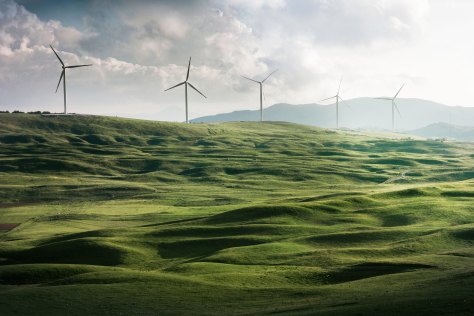
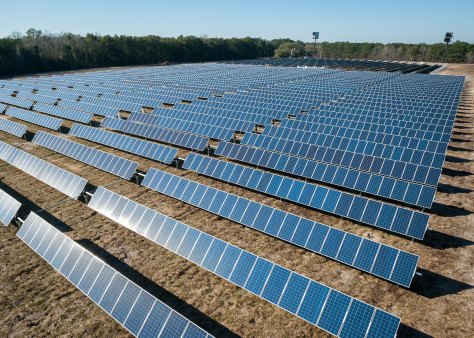
Individual actions are important, but big companies have a key role, above all, by influencing people in their behavior. Many nations are beginning to realize the importance of replacing fossil fuels by clean and renewable energies, like UK, which has tripled the amount of renewable capacity in the past five years. Now all forms of renewable energy in the UK has overtaken that of fossil fuels for the first time.
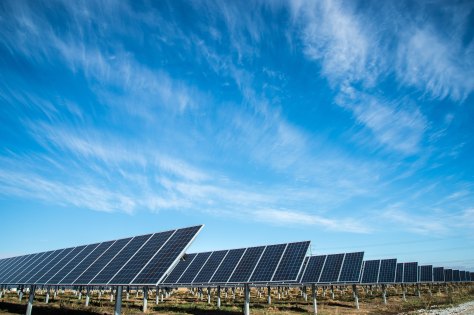
Photo: American Public Power Association / Unsplash
Currently, 40% of the UK’s energy comes from fossil fuels, against 28% from renewables, which shows that humankind is finding ways to build a better and more sustainable world. According to Adam Vaughan from The Guardian, “wind is the biggest source of renewables, followed by solar and biomass is the third”.
Whether in the past people did not care about the environment and had no conscious relation to what they consumed, since the last decade a new mentality has been formed. This is the result not only of the media, which has been showing the importance of preserving the planet, but also the posture of big companies and brands, government efforts, and especially individual actions.
Today, 35% of all waste generated in Europe is recycled, and that is giving new life and still generating revenue: about 1% of the GDP of the European Union comes from the recycling of waste.
Perhaps the best news of the year is that “the ozone layer is showing signs of continuing recovery from man-made damage and is likely to heal fully ultil 2060“, according to Fiona Harvey, from The Guardian. Formerly one of humankind’s biggest concern was related to the holes in the ozone layer, responsible for thousands of skin cancer deaths.
Photo: Karsten Würth / Unsplash
Recovery of the holes shows that the ozone layer over the northern hemisphere should heal completely unto 2030, result of global action by governments but also of people who today refuse to use certain types of products that harm the environment and health.
According to Erik Solheim, head of UN Environment, “The Montreal protocol is one of the most successful multilateral agreements in history for a reason”. For those who don’t know, the Montreal protocol is an international treaty made in 1987 in which the signatory countries undertake to replace substances that are found to be responsible for the destruction of ozone.
Individual actions as recycling the trash, changing the packaging of deodorant, reducing the amount of plastic and being aware of what and how much we consume may seem useless, but it has helped transform the future of humanity. There is still a lot to do before solving all the environmental issues of a world, where more than 7 billion people live, but informations like these shows that it is possible.
The World Bank is going to make about $200 billions available to fund actions for climate changes from 2021-25, helping countries adapt to the effects of global warming and reduce greenhouse gas emissions. However, everyone can and should do their part.
The COP 24 – Katowice Climate Change Conference that is taking place this week in Poland, will show us what will be the next steps that the nations will do together in the effort to improve the relationship between humanity and the environment.
Gabriela Glette


 The Mirror